If you think the dumpster rental business slows down for holidays, this video proves otherwise.
The day before Thanksgiving, we were still running routes, picking up heavy cans, navigating tight residential driveways, and dealing with cities that actively work against small dumpster businesses. This is the side of the industry nobody talks about when they’re selling you a “passive income” pitch.
This blog breaks down what really happened and, more importantly, what new dumpster business owners need to learn from it.
Working Holidays Is Part of the Dumpster Business
Dumpster rentals don’t stop just because it’s a holiday week.
Residential jobs might slow down, but commercial customers keep moving no matter what day it is. Construction doesn’t pause. Renovations don’t wait. Storage cleanouts don’t care that it’s Thanksgiving.
If you’re starting a dumpster business, understand this early:
- Holidays don’t automatically mean days off
- Commercial accounts will keep your trucks busy
- Flexibility matters more than fixed schedules
This is not a 9–5 business, and pretending it is will cost you customers fast.
Tight Residential Driveways Are Where Experience Pays Off
One of the stops in this video is a repeat residential customer with a winding, uphill driveway, keypad gates, packages everywhere, pumpkins, landscaping, and zero room for mistakes.
These are the jobs that separate experienced operators from rookies.
Key lessons for new owners:
- Tight driveways require slow setups and communication
- Overhangs, garages, and keypad posts are silent killers
- Every turn swings the front bumper in the opposite direction
- You need to ask the customer exactly how they plan to load
In this case, door swing clearance mattered more than perfect placement. That’s the kind of judgment call you only learn by doing.
Communication Prevents Damage and Disputes
Before final placement, we stopped and called the customer.
Why?
Because assumptions cost money.
Customers don’t always understand:
- How far a dumpster door needs to swing
- How much space a truck needs to maneuver
- Why “perpendicular” doesn’t always physically work
Dumpster business owners must lead these conversations. If you don’t explain the limitations, you own the problem when something gets damaged.
Cities Are Actively Blocking Small Dumpster Companies
This is where the video turns serious.
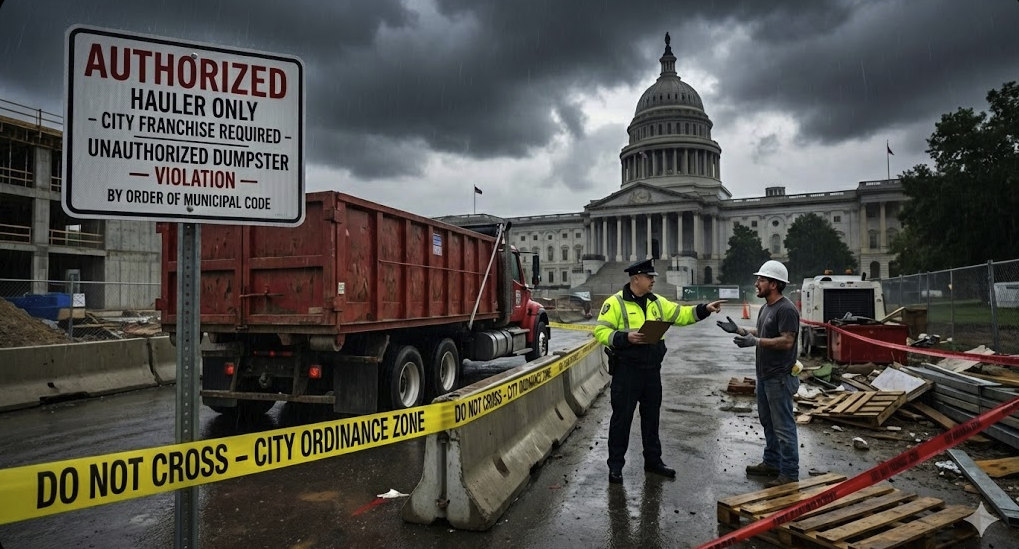
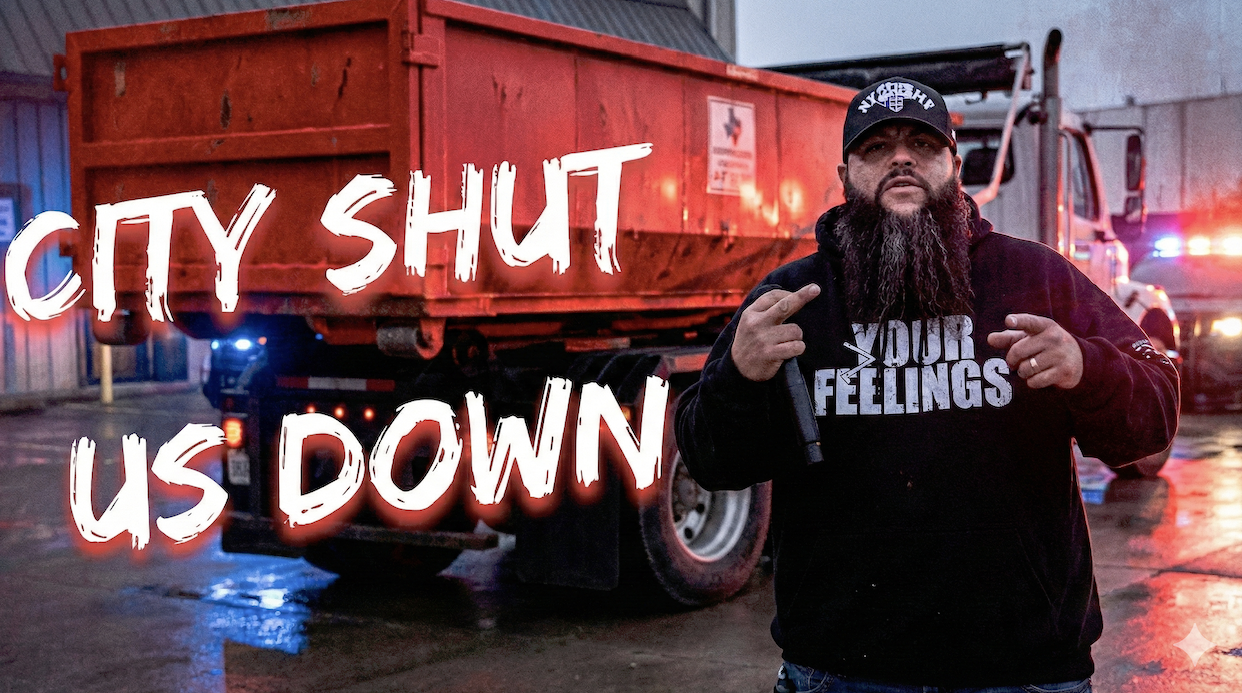
On one commercial job, work was stopped entirely because the contractor was using a non-approved city franchise dumpster. The city issued a stop order, not because of safety, not because of debris, but because the contractor wasn’t using the city’s preferred waste provider.
That means:
- No work allowed
- No progress on the project
- Forced compliance with a city-approved monopoly
This isn’t rare anymore. We’re seeing it in multiple Texas cities.
For dumpster business owners, this is a critical reality:
- Cities use ordinances to protect large waste companies
- Small operators are targeted first
- Contractors are pressured to drop you
- Your dumpsters become leverage against your customers
This isn’t about safety. It’s about control.
Exclusive Waste Agreements Hurt Everyone Except Big Corporations
When cities force contractors to use only one waste provider, everyone loses except the large corporations.
Contractors pay more.
Small businesses lose work.
Competition disappears.
Cities collect revenue.
From an owner’s perspective, this creates:
- Lost routes
- Idle equipment
- Wasted fuel
- Missed revenue opportunities
If you’re starting a dumpster business, research exclusive waste agreements before entering a city. Ignoring this will cost you far more than marketing mistakes ever will.
Dumpster Impounds and Tickets Are Becoming Normal
In addition to stop orders, cities are now:
- Impounding dumpsters from job sites
- Charging impound fees
- Issuing tickets to drivers who didn’t place the dumpster
This puts owners in a position where:
- You must protect your drivers
- You must budget for enforcement risk
- You must decide which cities are worth fighting
This is no longer theoretical. It’s happening right now.
Why This Matters for New Dumpster Business Owners
If you’re watching these videos or reading this blog because you want to start a dumpster business, understand this:
This industry is profitable — but it is political.
You’re not just competing with other haulers.
You’re competing with city contracts, exclusive franchises, and municipal power.
Success requires:
- Strong operations
- Thick skin
- Willingness to push back
- Community support
- Legal awareness
Dumpster businesses that survive aren’t just good at hauling — they’re good at navigating pressure.
Final Thoughts: This Is Bigger Than One Dumpster
This video wasn’t just about a pickup or a delivery.
It was about:
- Working when others are off
- Handling tight, risky placements
- Cities blocking small businesses
- Standing up instead of backing down
If you’re serious about this industry, pay attention to these moments. They’re not rare — they’re becoming normal.
And ignoring them is how good businesses get pushed out.