If you’re shopping for a dumpster trailer right now, you’re probably seeing more options than ever: hooklift, cable pull, electric, gas engine, standard rail, proprietary rail… and a whole lot of opinions online from people who don’t actually run these things day to day.
In this video, I’m at the Dumpster Expo in Ponder, Texas, walking the show floor and breaking down what’s really out there right now — and more importantly, what actually makes sense depending on your business, your market, and what you’re hauling.
This isn’t a sales pitch. It’s a reality check.
Why this matters: the trailer decision can make or break you
Most new dumpster business owners obsess over dumpsters and marketing, but the trailer choice is what determines how efficient you are, what jobs you can take, what breaks, and how fast you can scale. Buy the wrong setup and you’ll spend more time fighting equipment than making money.
And here’s the part nobody wants to say out loud: a lot of people blame manufacturers for failures that are really operator problems. If you overload equipment or expect a light-duty trailer to do heavy concrete work, something is going to give.
Clayton said it best in the video: buying the wrong trailer for the workload is like buying a toaster and trying to bake a cake.
Trailer setup #1: Swaploader all-electric hooklift (16K GVWR)
One of the first trailers I highlight at the Expo is an all-electric hooklift trailer from Swaploader. It’s a 16K GVWR setup, and the thing that stands out right away is how clean and simple the concept is — no onboard gas engine. It’s powered by batteries and electric components running the hydraulic system.
What I like about the electric setup
Electric hooklift systems are attractive because they can reduce some of the mechanical complexity you deal with on engine-based systems. You’re looking at an onboard hydraulic tank, pump, battery bank, inverter components, wireless remote control, and the usual accessories like tarp systems, jacks, spare tire, etc.
The truth about electric trailers
Electric is not “better” automatically — it’s just different. It can be awesome if it matches your workflow and you’re realistic about what you’re asking it to do. But it’s not magic. Batteries, electrical components, and charging still require attention. If you want simple reliability, you better maintain it like your business depends on it… because it does.
Trailer setup #2: Keystone cable pull with a reving system (16K)
Next up is a Keystone cable pull trailer with a reving system. If you’ve never used a reving system, the simple version is: it gives you more pulling power without having to rig snatch blocks every time.
Why the reving system matters
More pulling power can mean smoother pickups, fewer headaches, and less strain when you’re working near the upper end of what the trailer is designed to do. This type of setup is common for standard rail operations and is still a strong option for a lot of businesses.
Gas engine vs electric
With an onboard engine trailer, you’ve got power on demand — but you also have an engine to maintain and fuel to manage. Some guys love that because it feels “industrial” and dependable. Others would rather deal with batteries than small engines. Neither is wrong. What matters is matching the equipment to your business.
Trailer setup #3: Cam-Concept hooklift trailer (gas engine)
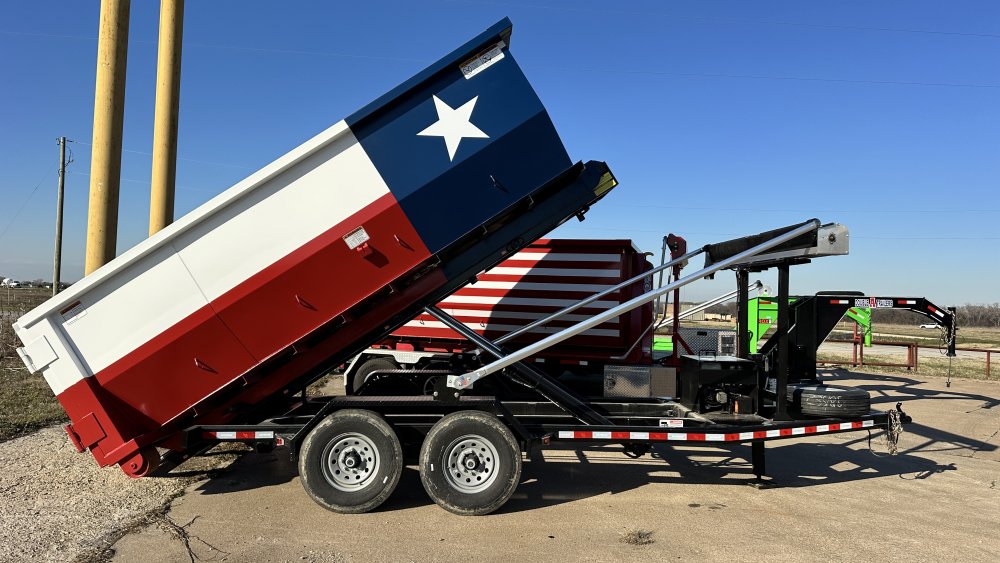
I also show the Cam-Concept hooklift trailer — an onboard engine setup with an enclosed engine compartment. It’s a beast of a trailer and built for 14–16 ft dumpsters (15s, 20s, etc.) depending on how you’re configured.
Why hooklift is a different animal
Hooklift trailers are a different feel compared to cable pull. It’s a cleaner pickup method, and for many operators it feels like a more scalable system — again, assuming you’re not trying to do work the equipment was never designed for.
And just to be clear: this is not “battery vs no battery.” Hooklift systems still use batteries for things like remote start and control. The big difference here is the power source for the hydraulic work.
The big debate: Standard rail vs proprietary / non-standard rail
This is where the conversation gets real.
A lot of people online act like standard rail is the only acceptable setup. The truth is: standard rail is usually the best path if you want long-term flexibility, easier scaling, and fewer compatibility issues.
But can a non-standard / proprietary system work? Absolutely.
Clayton runs a whole operation on non-standard rail. It’s not the “norm,” and it creates challenges — but it works because he knows his market, knows his equipment, and runs his business hard.
Here’s the honest rule
If it works for your business and your area, run it.
If it doesn’t work, stop being stubborn and change it.
Evolution trailer: heavy duty, well-thought-out, and built from feedback
One of the most impressive trailers shown is the Evolution setup. This trailer is built with a level of detail that tells you it was designed by people who actually listen to operators.
Features that stood out
This is one of those trailers where the little things matter:
- LED work lights and rear lights
- Strobe lighting with pattern control
- Thoughtful electrical layout and component housing
- Storage solutions and add-ons that real drivers actually use
- Heavy-duty tires and robust build quality
The big theme with Evolution was this: they build based on user feedback, and they’re moving toward “most accessories included” instead of nickel-and-diming you with upgrades.
That’s the kind of manufacturing mindset the industry needs more of.
Cougar Manufacturing: the budget-friendly standard rail option (and why it matters)
After the Expo chaos, I made sure to cover Cougar Manufacturing back at HQ because this is where a lot of new guys need to pay attention.
If you’re starting out and trying to get into a standard rail setup without dropping insane money, Cougar is one of the more affordable paths I’ve seen.
Why this matters for a new business
A lot of new operators start with proprietary equipment because it’s cheaper upfront — then later they realize they boxed themselves in. If your goal is to scale, standard rail is usually the smarter long-term play.
Cougar’s setup is simple, effective, and gets the job done:
- 16K GVWR
- Front toolbox
- Battery-powered winch / cable pull
- Electric tarp
- Strong axle/tire setup (including oil-bath axles)
- Smart charging options (including alternator charging through plugs)
This is the kind of trailer that can get you started the right way without pretending you need the most expensive rig on day one.
The takeaway: choose the right tool for the job
Here’s the bottom line:
There’s no “best” dumpster trailer for everybody.
There is only:
- the best trailer for your market,
- the best trailer for your workload,
- and the best trailer for your budget and growth plan.
If you want fewer breakdowns and faster scaling, stop shopping based on hype and start shopping based on reality.
And whatever you do — don’t buy a trailer and then get mad it didn’t survive work it was never designed to do.
Need help choosing a trailer?
If you want help selecting the right setup, or you want quotes on trailers you saw in this video, reach out and we’ll point you in the right direction.
Website: www.americanaftrailers.com